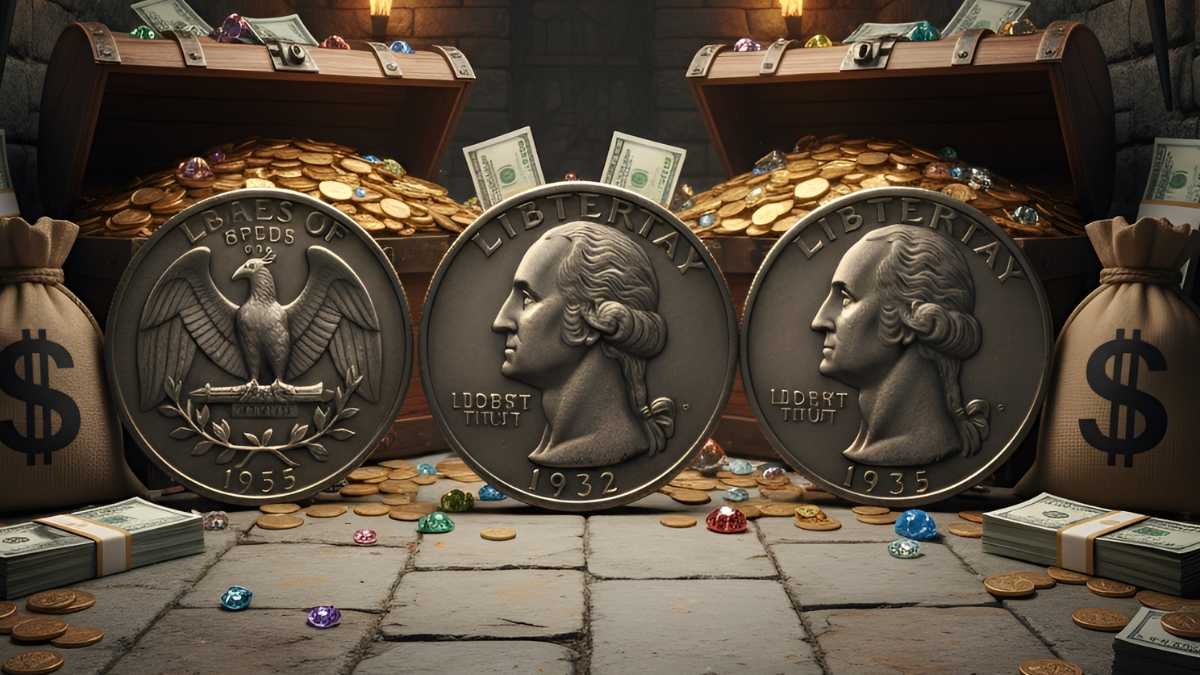
Washington Quarters Value Guide: The Washington quarter, first minted in 1932 to honor the bicentennial of George Washington’s birth, has become one of the most collected coins in American numismatics. While most quarters are worth only face value, certain rare dates, mint marks, and error varieties have elevated specific examples to extraordinary worth. In 2026, collectors continue to hunt for these treasures, with some Washington quarters commanding thousands of dollars at auction.
Historical Background
The Washington quarter replaced the Standing Liberty quarter in 1932. Designed by John Flanagan, it featured Washington’s portrait on the obverse and an eagle on the reverse. Initially intended as a one-year commemorative coin, it became a permanent fixture in U.S. coinage. Over the decades, design changes and minting variations created rare specimens that collectors still chase today.
Why Washington Quarters Are Valuable
The value of Washington quarters depends on several factors:
- Mintage numbers: Low production years yield rarities.
- Mint marks: Coins from Denver (D) and San Francisco (S) can be scarcer than Philadelphia issues.
- Errors and varieties: Doubled dies, off-center strikes, and unusual planchets add significant value.
- Condition: Coins in Mint State or proof condition are worth far more than circulated examples.
Famous Rare Washington Quarters
Collectors in 2026 continue to seek out several notable varieties:
- 1932-D and 1932-S: Low mintage first-year issues, highly prized in high grades.
- 1937 Doubled Die Obverse: Features dramatic doubling on Washington’s portrait.
- 1943-S Doubled Die Obverse: Another rare doubled die variety.
- 1950-D/S Over Mintmark: A scarce variety with overlapping mint marks.
- 1970-S Proof Struck on Silver Planchet: An unusual error coin worth thousands.
- 1976 Bicentennial Quarter Errors: Rare varieties from the iconic drummer boy design.
- 1982 No Mint Mark: Philadelphia coins missing their mint mark, highly collectible.
- 2004-D Wisconsin Extra Leaf Quarter: Famous for its extra leaf variety on the corn stalk.
Collector Frenzy
Auction houses and online marketplaces are seeing strong demand for Washington quarters. High-grade examples of the 1932-D and 1932-S regularly sell for thousands of dollars. Error coins such as the Wisconsin extra leaf variety have also achieved impressive prices. The excitement surrounding these coins inspires collectors to examine their own holdings more closely, hoping to uncover hidden gems.
The Role of Coin Grading
Professional grading services such as PCGS and NGC play a crucial role in determining value. Coins certified at Mint State 65 or higher often sell for multiples of their ungraded counterparts. Proof coins with deep cameo contrast are especially prized. Collectors rely on grading to ensure authenticity and maximize investment potential.

Investment Potential
While coin collecting is driven by passion, Washington quarters have proven to be strong investments. Rare varieties continue to appreciate in value, and demand remains steady. For new collectors, starting with affordable circulated examples can be a gateway to building a valuable collection over time.
Hidden Treasures in Everyday Life
Stories of rare quarters discovered in jars of change, old collections, or family heirlooms continue to inspire collectors. The Washington quarter serves as a reminder that treasures may still be hiding in plain sight. Careful examination and knowledge of varieties can turn an ordinary coin into a life-changing discovery.
Conclusion
The Washington quarter remains a cornerstone of American coin collecting. While most examples are common, rare varieties and minting errors have achieved legendary status, with some worth thousands of dollars. For collectors, these coins represent history, artistry, and the thrill of discovery. In 2026, the pursuit of Washington quarters continues to captivate enthusiasts, proving that even modern coins can hold extraordinary value.