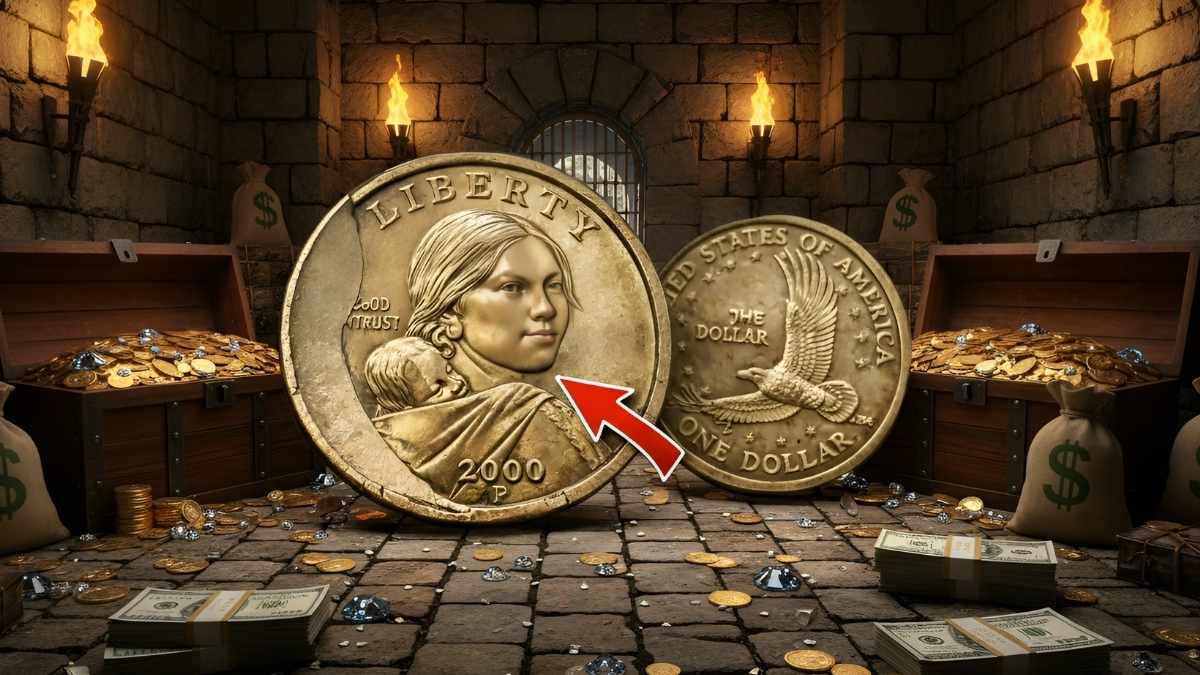
Coin Collecting Spotlight: The Sacagawea dollar was introduced in 2000 as part of a new initiative to modernize American coinage. Designed to honor Sacagawea, the Shoshone woman who guided the Lewis and Clark expedition, the coin features her portrait carrying her infant son, Jean Baptiste, on the obverse. The reverse originally depicted a soaring eagle, symbolizing freedom and exploration. Struck in a golden-colored manganese brass alloy, the coin was intended to stand out from other circulating coins and encourage public use.
The Story of the Error Coin
While most Sacagawea dollars are common and worth only face value, a rare error coin from 2000 has captured the imagination of collectors. This coin, often referred to as the “Cheerios” dollar, was distributed in cereal boxes as part of a promotional campaign. What makes it extraordinary is the enhanced eagle tail feather design on the reverse, which differs from the standard issue. This small variation transformed the coin into one of the most sought-after modern rarities.
Why Collectors Value the Error
The 2000 Sacagawea dollar error is prized because of its scarcity and unique design. Only a limited number were produced, and many were lost or overlooked in circulation. For collectors, owning one of these coins is like holding a piece of numismatic history. Its rarity, combined with the story of its distribution, adds to its mystique and value. Reports of the coin reaching astronomical figures in auctions highlight the powerful role of demand in shaping market prices.
Identifying the Rare Variety
Collectors seeking to identify the valuable 2000 Sacagawea dollar error should examine the reverse carefully. The enhanced eagle tail feathers are the key distinguishing feature. Using magnification tools can help confirm the details. Professional grading services provide authentication and certification, ensuring that collectors can trust the rarity and value of their coins. Authentic examples are rare, and condition plays a major role in determining worth.
The Role of Condition and Grading
Condition is critical in assessing value. Coins are graded on a scale ranging from poor to mint state, with higher grades commanding premium prices. A circulated Sacagawea dollar may only be worth face value, while an uncirculated or proof example of the error coin can be worth significantly more. High-grade examples are especially prized, as they combine rarity with pristine preservation.
Market Trends and Collector Demand
The market for Sacagawea dollars has seen fluctuations, but rare varieties continue to attract strong interest. The story of the 2000 error coin reaching billion-dollar valuations underscores the extraordinary potential hidden within modern coinage. Collectors are increasingly drawn to coins that combine historical significance with rarity, and the Sacagawea dollar fits this profile perfectly. Market demand for rare varieties remains steady, with prices reflecting both scarcity and cultural importance.

Collector Insights
For many collectors, the Sacagawea dollar represents more than just currency. It is a tribute to a woman whose role in American history was pivotal. Collectors often enjoy assembling complete sets, including proof issues and special varieties. Others focus on acquiring rare promotional coins or error strikes. The pursuit of these goals fosters a deeper appreciation for the artistry and history embedded in each piece. Collecting Sacagawea dollars is both a celebration of heritage and an exploration of numismatic diversity.
Investment Potential
While coin collecting is often driven by passion, the Sacagawea dollar also offers investment potential. Rare examples in high grades tend to appreciate over time, especially as demand grows. The intrinsic value of the coin lies not in its metal content but in its rarity and historical significance. For investors, Sacagawea dollars represent a tangible asset that combines cultural heritage with financial opportunity. The billion-dollar example demonstrates how modern coins can achieve extraordinary value under the right circumstances.
The Joy of Discovery
Part of the enduring charm of coin collecting lies in the possibility of discovery. Stories abound of collectors finding rare coins in unexpected places, from old collections to circulation. The Sacagawea dollar, with its unique varieties and errors, continues to inspire this sense of adventure. Each discovery reinforces the idea that treasures can still be hidden in plain sight, waiting to be recognized and appreciated.
Conclusion
The 2000 Sacagawea dollar error remains one of the most fascinating modern treasures in American numismatics. Its design honors a remarkable figure in history, while its rare variety offers collectors the thrill of extraordinary value. The story of a coin worth billions underscores the importance of paying attention to details, condition, and rarity. Whether pursued for passion or investment, Sacagawea dollars remind us that even modern coins can carry timeless significance and remarkable worth.